Tooth Gap 4 mm
The open distance between two adjacent teeth.
This is the dimension most buyers usually mean when they describe a comb as wide-tooth or fine-tooth.
Comb Teeth & Structure Guide
A toothed comb is not defined by “wide teeth” or “fine teeth” alone.
The finished product is defined by tooth spacing, width, length, profile, tip shape, root transition, body thickness, material, and whether the comb uses Teeth Slitting or Inlaid-tooth Comb construction. Use this guide to understand both the structural variables and manufacturing routes before selecting an existing product or starting a custom project.
ZZCTB_190040006_0049 · 190 × 40 × 6.5 mmSource-recipe diagrams; estimated contours await sample review. An approved 3D model is still pending.
Start with the complete product, not just the teeth.
Comb Body / Spine + Tooth Field + Tooth Geometry + Tooth-Manufacturing Route + Handle or Grip Area + Edge & Surface Finish
The body or spine provides the main structural support.
The tooth field defines how many teeth are used, how they are spaced and how much of the comb body is dedicated to the working area.
The handle or grip structure determines how the product is held and how the tooth field connects to the rest of the comb.
These elements should be reviewed together because changing one dimension can affect the others.
Separate gap, pitch, width and length when specifying a comb.
Several measurements are often grouped together as “tooth spacing,” but they describe different parts of the structure.
The open distance between two adjacent teeth.
This is the dimension most buyers usually mean when they describe a comb as wide-tooth or fine-tooth.
The transverse width of each tooth, measured at a defined position such as the root datum.
Two combs can have a similar open gap while using teeth with different widths.
Tooth pitch describes the repeating distance from one tooth position to the next and therefore includes both tooth width and the adjacent open space.
The distance from the tooth root to the tip.
Wide spacing does not automatically mean shorter or longer teeth. Spacing and tooth length are separate design variables.
For sourcing and development, these measurements should therefore be defined separately:
Gap + Tooth Width + Pitch + Tooth Length
Choose the tooth field according to the product direction.
Different product examples at one scale, with a 20 mm reference. Dual fields keep their source allocation and transition.

ZZCTB_190040006_0049 · 190 × 40 × 6.5 mmA wide-tooth comb uses larger open spaces between adjacent teeth.
This creates a more open tooth field and is commonly used for product directions associated with detangling, thicker hair or more open combing structures. Wide-tooth refers specifically to the spacing between teeth, not to the overall size of the comb.
Main points to define:
ZZXTDS_175037006_0053 · 175 × 37 × 6.5 mmA fine-tooth comb uses more closely spaced teeth.
This creates a denser tooth field and is commonly used for product directions requiring finer control, smoothing or styling-oriented positioning.
Main points to define:
ZZCXXDS_137030050_0050 · 137 × 30 × 5 mm · 48% / 52%One comb can combine coarse and fine tooth sections in the same product.
This can be arranged as two tooth densities along one edge or as different tooth fields on separate sides, depending on the product structure.
Fine-and-wide combination combs are already a recognized commercial format.
The important question is not simply whether both tooth types are present, but how much space each field receives and how the transition between them is handled.
Spacing is only one part of tooth geometry.
ZZCTB_190040006_0049Interactive whole views of these three different source products use one scale. Digital geometry is pending review; current GLB files differ from report hashes and do not confirm finished dimensions or manufacturing approval.
Static preview and diagrams remain available.
03. Wide, Fine or Dual-Tooth Structure?
Rounded Tooth Tips
Tooth Root · Body thickness · side view
After spacing is defined, the next step is to define the individual tooth.
Source-recipe diagrams; estimated contours await sample review. An approved 3D model is still pending.
A relatively consistent tooth width from root toward the tip.
Suitable for products where a visually regular tooth field is preferred.
The tooth becomes narrower toward the tip. This creates a different visual and structural transition from root to tip.
The end of the tooth is refined into a rounded or softened profile.
For bamboo and wooden combs, this result depends on both shaping and subsequent fine sanding.
The transition between the tooth and the comb body is also important.
The tooth root needs to connect the tooth field to the body while leaving enough material for the intended structure.
The sides, corners and transitions around the comb body can be further refined through sanding and rounding.
This affects the final appearance and hand feel of the finished comb.

Placeholder awaiting reviewed photographs of tooth tips, roots and sanding.
Teeth cannot be specified independently from the body.
A wider or longer tooth field changes how much material remains in the comb body.
A thinner body changes the relationship between:
For that reason, requests such as:
“make the teeth thinner”
“make the gaps wider”
“make the comb body thinner”
should be reviewed as connected structural changes rather than independent parameters. Important body variables include:
Overall Length + Overall Width + Body Thickness + Spine Shape + Handle Structure + Tooth Field
The same tooth geometry should not automatically be applied to every material.
VANTRE's standard material directions for comb products include:
Selected premium custom projects can also involve other confirmed materials.
Natural bamboo and wood differ in grain, density, machining behavior and surface character.
This means tooth thickness, root structure, fine sanding and edge treatment should be considered together with the selected material.
The material name alone does not define the correct tooth structure.
After tooth geometry is defined, the next decision is whether the teeth are cut directly from the comb blank or produced separately and installed one by one.
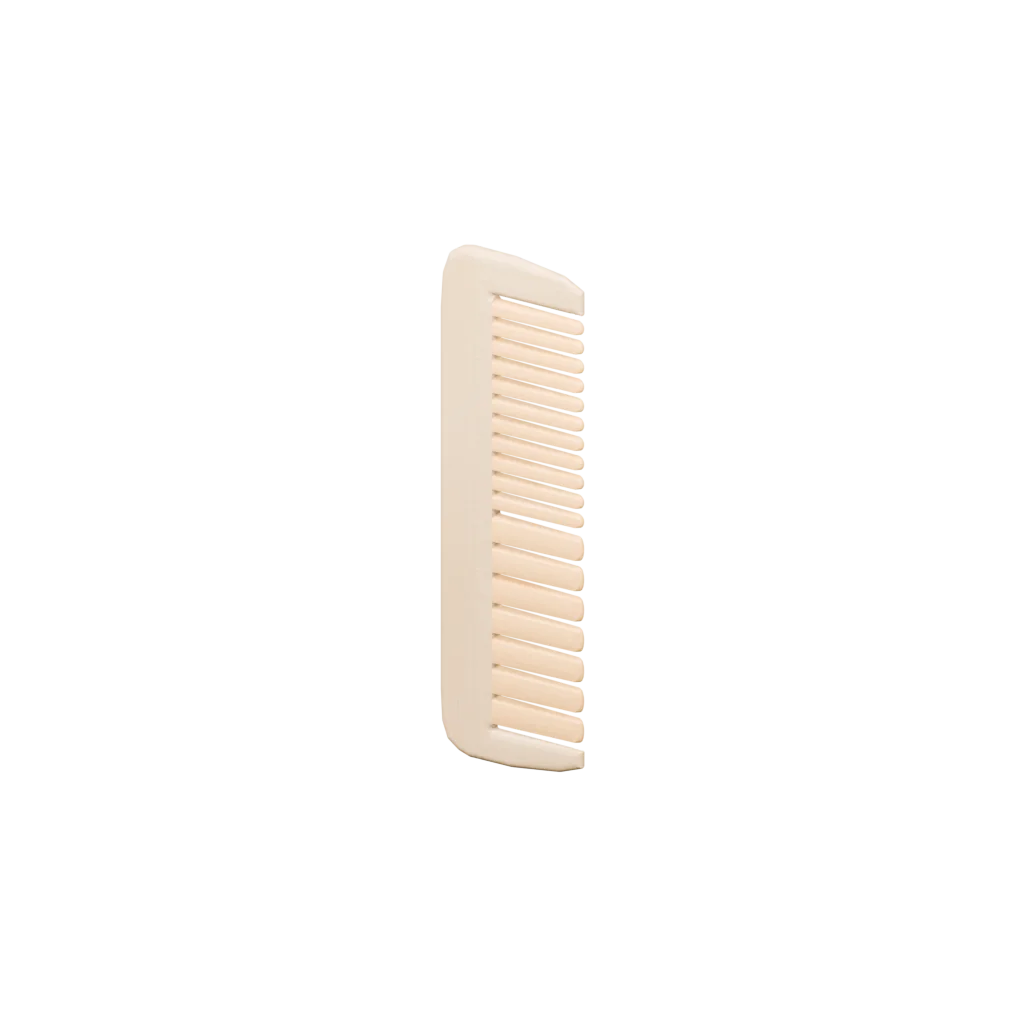
HZCXDDS_185053006_0029Independent inlaid-tooth connection example: HZCXDDS_185053006_0029, with a beech body and bamboo teeth, different from the three products above. Observe three real representative teeth separating and returning along the existing animation tracks; the other 15 teeth and body stay assembled. See the manufacturing page for the complete process. Source review is pending; hole-position markers are schematic, and actual seat holes, diameter, depth and fit are not verified.
Assembled | Representative teeth separated | Returned to position
Static preview and diagrams remain available.
Tooth shapes are saw-cut from the same board or comb blank, so the body and teeth remain one integral material structure.
This route suits bamboo and wooden combs intended to retain an integral material construction with a relatively direct tooth-forming sequence.
The body and teeth are produced separately. The body is precisely measured and marked, vertically drilled, adhesive is applied inside the holes, and the finished teeth are inserted and fixed one by one.
The body and teeth can use different materials and grain directions, such as a premium wood body combined with water-buffalo horn, bamboo or high-resilience polymer teeth.

Placeholder awaiting reviewed photographs of integral and inlaid sample connections.
Inlaid-tooth construction allows the body and teeth to be selected separately according to grain direction and load requirements, which can improve resistance to tooth breakage and enable different stiffness combinations.
Because the route adds precision measuring, drilling, adhesive application and tooth-by-tooth assembly, it normally carries a higher manufacturing cost than a comparable Teeth Slitting structure.
When selecting the route, confirm the material combination, tooth-load requirements, target feel, visual direction, sampling route and budget together.
A clear brief separates the product into measurable decisions.
When sourcing or developing a comb, define the following areas.
Confirm:
Confirm:
Confirm:
Confirm the body and tooth materials together with whether the comb uses Teeth Slitting or Inlaid-tooth construction.
For integral Teeth Slitting structures, the body and teeth come from the same board. For Inlaid-tooth Comb construction, the body and teeth can be selected separately, so both materials, grain directions and the connection method need to be specified.
Finally define:
A specification built this way is much clearer than simply requesting “a wide-tooth wooden comb.”
Not every comb needs to be developed from zero.
If an existing product is already close to the target, start from the nearest SKU and identify the differences.
Depending on product support, the next step can be:
Start with the nearest tooth structure and product form.
For changes to spacing, tooth form, handle, thickness or overall structure:
Send the reference together with the dimensions and structural changes you need.