Use Bulk when individual retail presentation is not required. The main questions are product protection, quantity per pack and the outer packing plan.

Packaging starts with the product that actually needs to be packed. Once the comb or hair brush has been selected or configured, the packaging can be defined around its size, shape, protection needs, presentation and brand information.
VANTRE packaging is supplied together with product projects. We coordinate the packaging direction, packaging components, branding files and physical sample confirmation as part of the same project rather than treating the box or bag as an unrelated standalone item.
The product comes first. The package is built around it.
VANTRE does not position this service as standalone packaging supply. Packaging-only requirements, quantities and shipping specifications are reviewed separately according to the actual project.
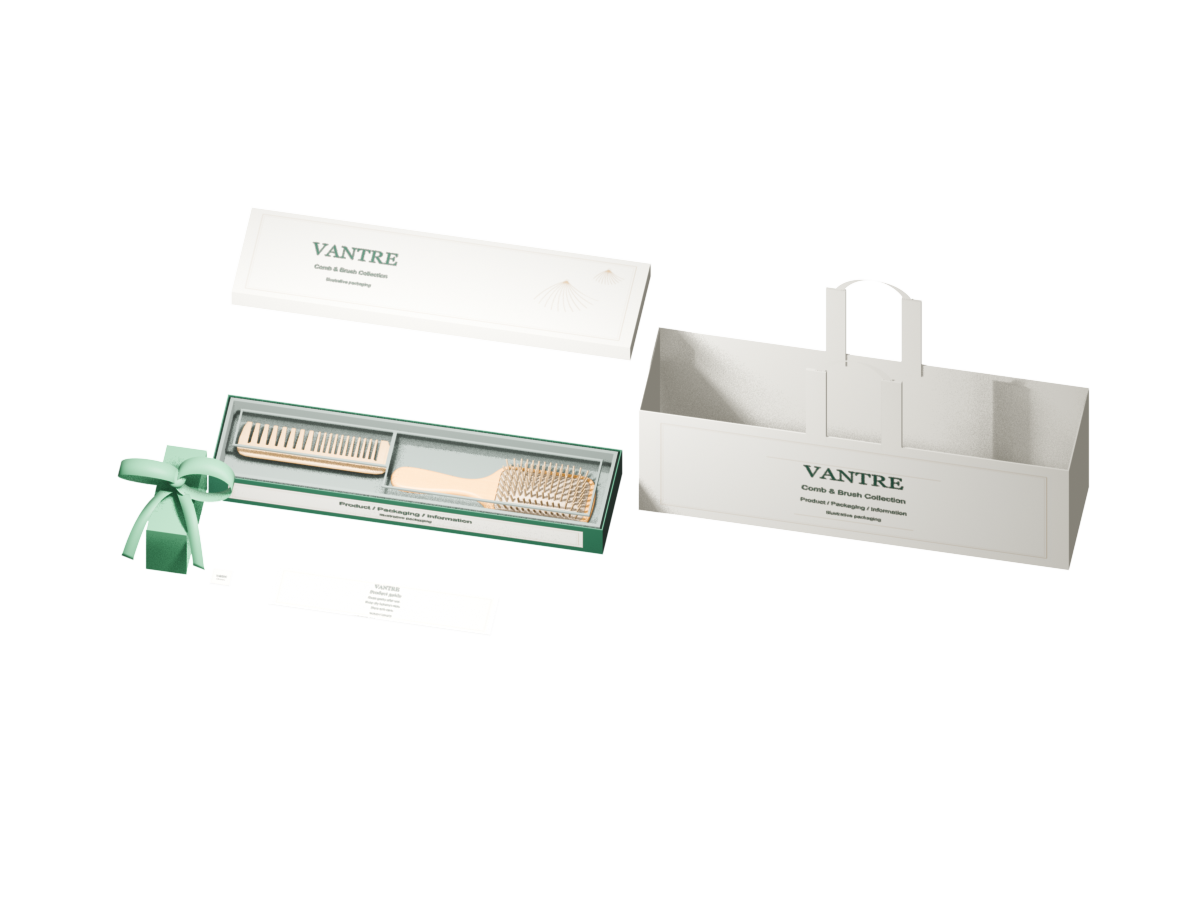
Different projects need different levels of protection, presentation and brand content. Start with the overall solution, then define the physical packaging components inside it.
Use Bulk when individual retail presentation is not required. The main questions are product protection, quantity per pack and the outer packing plan.
Use one main packaging component around the product, such as a transparent bag, fabric pouch or folding carton, when the project needs straightforward protection and presentation.

Combine two or more packaging components when one layer is not enough. A product can, for example, move from a transparent protective bag into a fabric pouch and then into an outer folding carton.

Use Premium when presentation is part of the product value. A premium solution can include a presentation box, insert or lining, one or more already-prepared products, a card or booklet and project-specific brand or information elements.

Use Custom when the standard solution profiles do not fit the product, product combination or intended presentation. The final structure is reviewed through the project rather than presented as an unlimited automatic packaging generator.
The solution level describes the overall packaging strategy. The bag, pouch, carton, premium box, insert and booklet are the physical components used to build that strategy.
Combination packaging is built from the inside out. Each layer protects, presents or organizes what is inside the next layer.
Product / Transparent Bag / Fabric Pouch / Folding Carton
A transparent bag can provide a simple direct layer around one product or, where the project allows it, several products. Material, closure, branding and label requirements depend on the selected packaging profile.
A fabric pouch adds a softer presentation layer and can be selected from the styles and materials confirmed for the project. Logo or label methods are chosen according to the pouch material and construction.
A folding carton provides an outer paper package for protection, retail information and branding. Box style, paper material, printed information and product fit are confirmed around the actual product or inner packaging layer.
A combination is not created by choosing unrelated packages independently. The inner layer defines the space required by the next layer, so product size and the order of the packaging layers affect the final configuration.
Premium packaging can present a single product or bring several already-prepared products together in one coordinated set.
Additional products are selected from existing products or products that have already been configured for the project. Packaging configuration arranges and presents those products; it does not reopen their material, dimension or structural customization inside the packaging step.
For multi-product sets, the products are arranged using a confirmed layout rather than arbitrary free positioning. The combined product size, spacing and insert structure determine the required presentation-box size.
The insert organizes the contents and helps protect the product position. Paperboard, EVA, flocked, fabric-lined, wooden-divider or other project-confirmed directions can be discussed according to the product and presentation requirement.
Depending on the project, the outer presentation component may be a rigid paperboard box, wooden box, bamboo box or another confirmed presentation structure.
A premium project may include a product card, brand card, instruction booklet, QR product information or a simple project-specific information lookup requirement. More complex information services are reviewed separately through the project.
Premium packaging is therefore a complete presentation solution, not simply a larger paper box.
Neutral placeholder only. Real files, capture dates, usage permission and human review are still pending.
Packaging materials and closures are selected according to the packaging component and actual project requirement. The options below describe common directions rather than guaranteed stock for every project.
Transparent bags may use project-confirmed film materials such as OPP/BOPP, CPP or PE, with closures such as self-adhesive, heat-sealed or other supported profiles.
Fabric pouches may use cotton, linen, polyester, velvet or other confirmed fabrics, with drawstring, flap, zipper or other supported constructions.
Folding cartons may use white card, kraft board, black card or other confirmed paperboard materials, with structure and print treatment selected according to product fit and presentation.
Premium presentation boxes can use rigid paperboard, wood, bamboo or other project-confirmed structures, together with inserts or linings selected for the contents and layout.
Final materials, thicknesses, closures, print processes and structural details are confirmed through the project and sample process. The website does not replace engineering or physical sample approval.
Branding can appear on the product, on one or more packaging layers, or across the complete presentation.
Product branding may use the decoration methods supported by the selected product material and finish.
Packaging branding can include a logo, simple artwork, printed information or other project-confirmed surface treatment appropriate to the packaging material.
Product labels, barcode labels and seal labels are handled separately from the main artwork so the required information can be placed and updated clearly.
Cards and booklets can carry instructions, product information or brand content when the project requires information beyond the package surface.
For Premium projects, QR product information, instructions, serial/batch lookup or a simple project-specific information service can be discussed. These requirements are project features, not a general-purpose software product.
The goal is a coordinated presentation in which the product, packaging and information remain consistent.
Digital files, SVG previews and 3D packaging models help define and communicate the configuration. They do not replace the physical sample.
Define / Preview / Physical Sample / Verify / Approve
Confirm that the actual product, inner packaging layer and insert fit correctly, including protection around teeth, pins, bristles, mirrors or other exposed product details where required.
Confirm logo position, artwork, labels, barcode information, cards, booklet content and other printed information on the actual packaging.
Confirm that the selected layers, folding carton, premium box, insert and multi-product arrangement work correctly as a physical structure.
Outer-carton marks, packing quantity and carton requirements are confirmed according to the actual order and packing plan rather than a single generic specification.
The approved physical sample becomes the reference for the agreed packaging configuration before the order proceeds.
Neutral placeholder only. Real files, capture dates, usage permission and human review are still pending.

If the product is already clear, send the selected product, required packaging level, available brand files and any label, booklet or information requirements so the packaging configuration can be reviewed.
If you are still deciding between products, select or configure the product first. Packaging dimensions and presentation should be based on the actual item rather than a generic box size.
Customer logos, trademarks, packaging artwork, labels, barcodes, booklet content, proprietary graphics and other customer-specific brand materials are used only for the agreed project unless otherwise authorized. VANTRE's general packaging profiles, structures, production methods, templates and manufacturing know-how are not automatically transferred as part of an individual packaging project.
View Custom Development Terms