How buyers are shifting to natural grooming
Across hotels, pharmacies, gift channels and e-commerce brands, a shift toward natural-material grooming tools is visible in buyer selections. It shows in the questions buyers ask: certificate documents before price sheets, packaging material lists before samples, and ESG questionnaires attached to RFQs. This article collects examples of buyer focus areas and a practical four-step sourcing checklist for comparing options.

What buyer inquiries show
- Inquiry composition: buyers often ask for FSC chain-of-custody documents, finish safety reports and packaging material lists in the same email that requests pricing.
- Channel examples: hotel amenity programs, pharmacies, gift channels and e-commerce brands each show natural-material selections in buyer inquiries.
From usage to order size
Estimate annual usage from occupancy and replacement policy first, then set MOQs from that figure.
Background: rules buyers refer to
Earlier natural-product waves followed preference cycles. Current buyer interest refers to external rules that can be checked: the EU Single-Use Plastics Directive covers listed categories — check your own SKU scope; packaging and packaging waste rules set recyclability and plastic-reduction expectations for components including hangtags and pouches; and several hotel groups have published schedules for removing plastic amenity items. These documents affect how buyers write specifications and checklists.
Regulatory references buyers check
| Instrument | What it changes | What suppliers must provide |
|---|---|---|
| EU Single-Use Plastics Directive | Covers listed single-use plastic categories — check your own SKU scope | Plastic-free alternatives with material documentation |
| EU packaging and packaging waste rules | Recyclability and plastic reduction for packaging and inserts | Packaging material lists and recyclable design |
| Hotel group sustainability commitments | Room amenity plastic-phase-out on published schedules | Bamboo and wood amenity programs with material documentation |
| ESG procurement questionnaires | Supplier screening in retail and hospitality tenders | Chain-of-custody, quality management and social compliance documents |
Regional buyer focus: examples
Buyer checklists differ by region, as examples: some European buyers start from compliance documents and plastic-free packaging; some North American brands emphasize material story and packaging presentation; some Middle East buyers emphasize engraving and gift-ready presentation; some Asia-Pacific hotel programs emphasize existing styles, MOQs and lead times. Treat these as examples to check against your own SKU scope, not as rankings.
What the regional picture means for your category plan
- Documentation is part of the baseline: chain-of-custody, quality management and social compliance documents belong in your standard supplier file, with scope confirmed per target market.
- Storytelling is the differentiator: in North America and the Middle East, the material story and the packaging carry the premium price.
- Volume is the capacity risk: Asia-Pacific and hotel programs consume production slots that are often reserved before Q3–Q4 peaks.
- One product architecture can serve all regions: a natural-material comb-and-brush range with optional engraving and multiple packaging tiers covers compliance-led, storytelling-led and volume-led buyers.
Material outlook: bamboo, wood and natural rubber
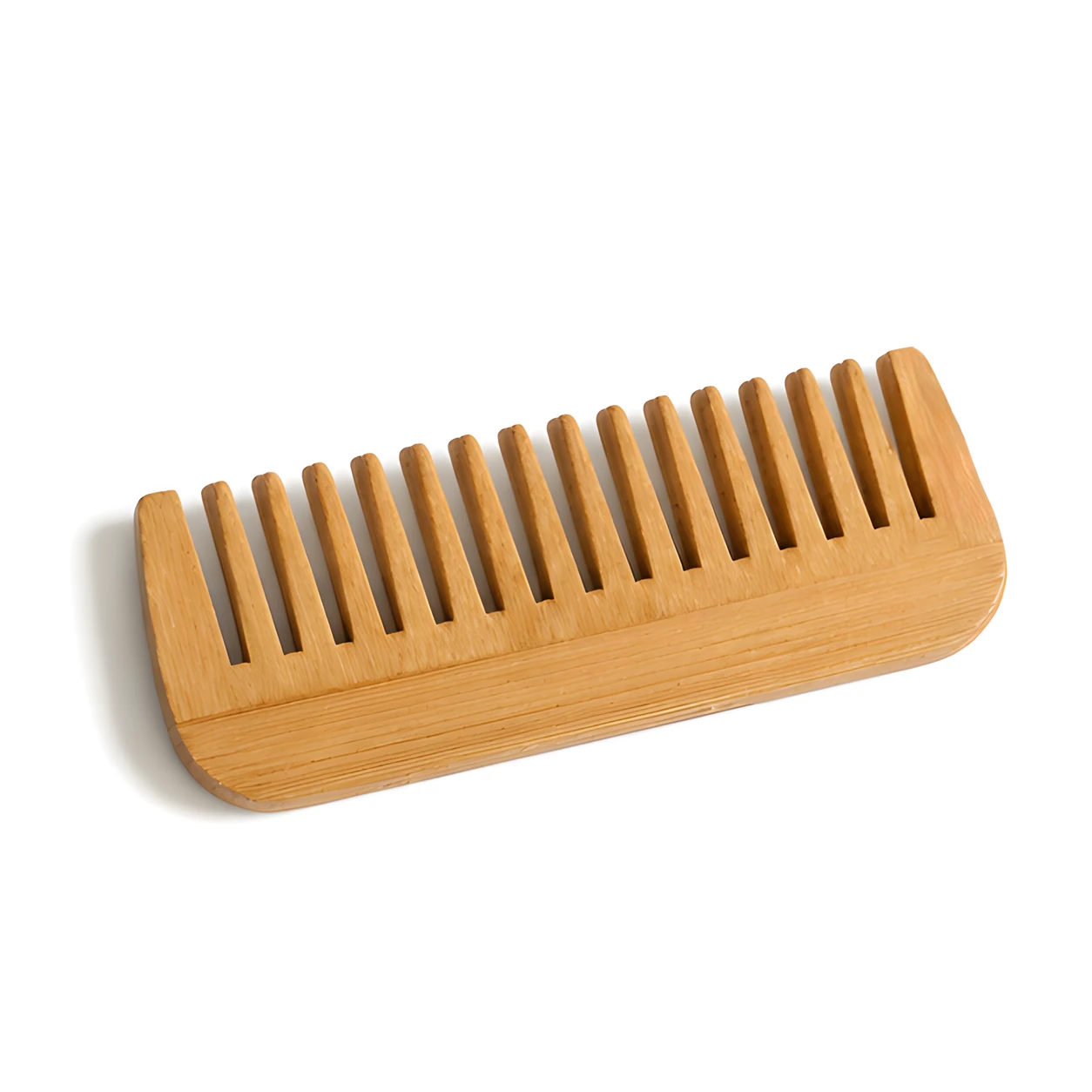
Three materials carry the category. Bamboo is the volume workhorse: it reaches harvest in four to six years, regenerates from its own root system and selected lines can be supplied with FSC chain-of-custody documentation on request, which makes it a common answer to compliance questions. Wood — beech, pear, camphor and others — offers warmer grain, heavier feel and a premium retail presence, and it remains a common choice for gift and barber channels. Natural rubber carries the cushion category as the BPA-free alternative to synthetic pads. At VANTRE, all three are produced in-house across the Bamboo, Wood, Cushion, Travel & Hotel and Gift & Promotion series, with hundreds of existing styles and full ODM support for custom development.
The certification stack buyers must verify
- Chain-of-custody: proves every production step, from material intake to finished product, uses certified material — a common requirement for sustainability claims in EU and North American procurement.
- Quality management documentation: covers production, inspection and corrective action, which is what large retail tenders audit.
- Social compliance audit documents: cover working-conditions audits — a common condition in European retail and hospitality supplier codes.
- Material and finish documentation: prepare files per target market, including EU and US requirements where applicable.
Hotel plastic phase-out: the amenity opportunity
Hotel amenity programs are a sizable procurement channel for natural grooming tools, and several groups have published schedules for removing plastic amenity items from rooms, replacing them with certified alternatives. The standard amenity specification is now a wide-tooth bamboo comb, a small natural-rubber cushion brush and plastic-free packaging, often with a laser-engraved hotel logo. Buyers who qualify suppliers early — verifying documents, sampling finishes and reserving capacity — keep a consistent supply position before the seasonal peak.
Retail and e-commerce: unboxing the natural story
In retail and e-commerce, the package is part of the product. Kraft and recycled-paper boxes, natural-fibre pouches, printed hangtags and Pantone-matched branding turn a bamboo comb into a gift-ready object that justifies a premium price. Merchants now audit packaging as carefully as product: the material list of the box, the insert and the pouch must all be plastic-free and recyclable to match the product claim. The winning retail format is a complete story unit — natural comb, engraved logo, recycled packaging, QR-linked care instructions — because it photographs well, unboxes well and earns the brand permission to charge more than the plastic alternative beside it on the shelf.
Supply chain realities: capacity and lead times
Natural-material production is constrained in ways plastic production is not. Bamboo and wood require drying, finishing and quality inspection stages that cannot be compressed, and capacity is shared across the whole export market. VANTRE's standard production lead time is 25–45 days, extending to 40–60 days in the Q3–Q4 peak, with ocean freight adding 30–35 days to the EU and 25–30 days to the US. Samples take five to ten business days and quotations are issued within two business days, numbered QT-xxxxx and valid for 14 days. The planning implication is direct: orders that enter production before the seasonal rush hold their dates, while late orders queue behind fully booked capacity.

Quality control for multiple export markets
Exporting natural-material grooming tools to multiple markets means meeting different safety and documentation standards simultaneously. Prepare finish and material files per target market. Our quality workflow covers finish documentation, material certificates and inspection records for every order, and quality issues reported within 15 days of delivery are handled through the after-sales process. Buyers can treat documentation speed as a supplier quality indicator — a factory that produces documents as fast as products helps goods move through customs and retail acceptance.
Costing the switch: natural vs. synthetic
| Dimension | Plastic grooming tools | Natural-material tools |
|---|---|---|
| Unit cost | Lower at entry level | Moderately higher; offset by compliance security and premium pricing |
| Documentation | Basic material certificates | Chain-of-custody plus finish safety reports as standard, scope confirmed per target market |
| Regulatory risk | Varies by market; check applicable rules for your SKU scope | Depends on documentation; prepare files per target market |
| Retail margin | Compressed by commodity competition | Premium-supported by material story and packaging |
| Lifecycle | Shorter perceived life, disposable perception | Longer use life; reusable and recyclable narrative |
A sourcing checklist
- Step 1 — Qualify: verify chain-of-custody, quality management and social compliance certificates, plus finish documentation for your target markets, before price comparison.
- Step 2 — Sample: order existing styles first — samples at USD 1–10 per piece for existing styles and USD 50–100 for custom work, refunded at 10,000 pieces.
- Step 3 — Lock capacity: reserve production slots 2–3 months before your launch season; standard lead times are 25–45 days and peak-season slots fill first.
- Step 4 — Scale: start with 3–5 SKUs from existing styles at 1,000 pieces each (single-order minimum 5,000 pieces across SKUs), then grow with custom shapes, engraving and private packaging as sell-through confirms.
How to audit a natural-material supplier
- Request the chain-of-custody certificate number and verify it against the public register — a valid number is the difference between a claim and a certificate.
- Compare samples against documents: the finish of the physical sample must match the material and safety documentation provided.
- Ask for the packaging material list, including inserts, pouches and hangtags, and confirm each component is plastic-free.
- Check capacity reality: ask for current order backlog and seasonal booking status, not just printed lead-time promises.
- Review the after-sales process: documented handling of quality claims within 15 days of delivery signals process discipline.
- Verify production itself: a factory tour or video audit of the finishing line reveals whether the workforce and equipment match the capacity claim.
FAQ: natural grooming sourcing
Is interest in natural grooming only short-term fashion? Buyer checklists refer to external rules — from EU plastic directives to hotel group phase-out schedules — so specifications include certified alternatives regardless of short-term sentiment.
Which documents should buyers check? Chain-of-custody for material claims, quality management for production quality and social compliance for working conditions, plus finish safety documentation for your target markets.
How far ahead should we plan orders? Standard lead times are 25–45 days with 40–60 days in peak season; adding 30–35 days of sea freight to the EU, capacity reservations 2–3 months ahead are the practical planning horizon.
Can we start small and scale later? Yes — existing styles start at 1,000 pieces per design, samples cost USD 1–10 each, and the same supplier relationship scales into custom programs at 5,000 pieces as sell-through confirms. Sample fees are refunded at 10,000 pieces.
Plan your natural line with VANTRE
VANTRE is a bamboo and wood comb manufacturer founded in 2005 in Langqiao, Jing County, Anhui, operating a 12,000 m² plant with 50+ staff and 5,000,000 combs of annual capacity. Our bamboo, wood and cushion lines cover existing styles and full ODM development, with quotations within two business days and samples in five to ten. Send your sourcing brief to quote@vantrecomb.com — whether you are replacing a plastic line, building a hotel amenity program or launching a natural-material brand.
Buyer selections are moving toward natural materials, and buyers who plan early protect schedule.