Two tools, two very different jobs
Walk into any hotel bathroom or any premium retail shelf and you will find the same pairing: a cushion brush and a wooden comb, sitting side by side. They look like interchangeable grooming accessories, but they are engineered for different jobs. A cushion brush uses a flexible air-cushion pad and floating bristles to absorb pressure, massage the scalp and smooth hair without pulling. A wooden comb is a precision instrument built for parting, detangling, styling control and travel. Choosing between them is never about which one is better — it is about which one fits the hair, the routine and the price point. This guide walks you through a two-step decision process: first diagnose the hair profile, then match the tool. We also cover the material safety, sourcing and OEM details that matter when you buy for retail, hotel programs or your own private-label brand.

Step 1: Diagnose the hair profile first
Every grooming tool decision starts with the hair. A brush that is perfect for fine, straight hair can damage thick, curly hair, and the reverse is equally true. Before you look at any product, answer three questions: Is the hair fine, medium or coarse? Is it straight, wavy or curly? Is it styled mostly on dry hair, wet hair or both? These three answers decide whether your customer needs bristles or teeth, cushioning or rigidity — and they decide which SKUs belong in your assortment.
How to read your hair type
Hair type is the single strongest predictor of which tool a customer will keep using. The four profiles below cover the large majority of end users, and each one points to a different combination of tools:
- Fine or thinning hair: minimal friction is the priority. Soft-tipped cushion brushes and wide-tooth combs detangle gently with less pulling at the roots.
- Thick or coarse hair: wider spacing and longer teeth penetrate the mass of hair, reaching the scalp and detangling with the least breakage.
- Curly or coily hair: a wide-tooth wooden comb on dry or conditioned hair, plus a cushion brush used only for scalp massage — never aggressive brushing through the curls.
- Wet hair: hair is at its weakest when wet. Use bamboo or wooden combs only; nylon bristles on soaked strands cause micro-tears and split ends.
A quick three-question check for sourcing teams
- Ask about the daily routine: if volume and a smooth finish matter most, the cushion brush is the hero tool; if parting and styling control matter, the comb leads.
- Ask about hair length: long hair needs longer strokes and more cushion travel; short hair can be fully served by a compact pocket comb and a small paddle brush.
- Ask about sensitivity: irritated or sensitive scalps react better to natural rubber cushions and rounded wooden teeth than to hard synthetic surfaces.
Step 2: The cushion brush, explained
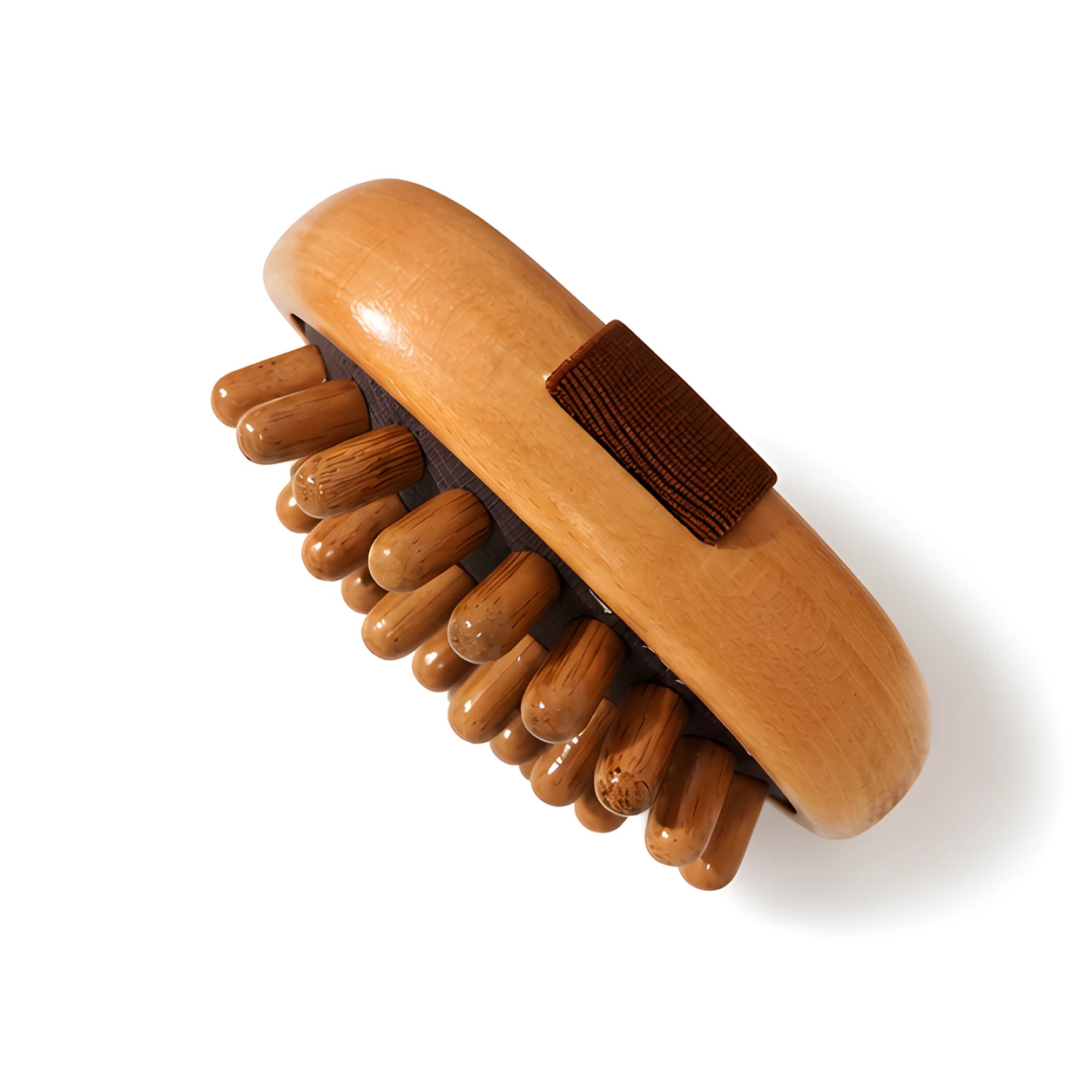
A cushion brush is a paddle-shaped brush with a flexible pad mounted on the base and bristles set into that pad. When the brush is pressed onto the scalp, the pad flexes, the bristles follow the curve of the head, and the force of each stroke spreads over the whole surface instead of concentrating on a few bristle tips. The result is a gentler stroke, a massage effect and a smoother finish. At VANTRE, cushion brushes are produced within the Cushion series, alongside the Bamboo, Wood, Travel & Hotel and Gift & Promotion series — hundreds of existing styles that share one quality standard: responsibly sourced materials where applicable, food-safe finishes and documented production control.
What the air cushion actually does: the WHY
The air cushion exists for one reason: pressure distribution. When you brush with a rigid board, the force concentrates on the bristle tips and every stroke tugs at the hair root. With a cushion pad, stroke pressure is absorbed and redistributed, so the brush glides instead of grips. Three benefits follow. First, scalp massage: the rhythmic flex of the pad stimulates circulation — the same effect massage therapists rely on for scalp health. Second, natural oil distribution: gentle strokes carry sebum from the roots along the hair shaft, adding shine and reducing the need for styling products. Third, static control: the combination of a flexible pad and natural bristle tips reduces static electricity, which means less frizz in dry climates and in strongly air-conditioned hotel rooms.
The best product ranges do not ask customers to choose between the brush and the comb — they sell the duo as the complete routine.
Cushion brush anatomy: three parts that matter
- The pad: natural rubber pads flex evenly and recover their shape for years, while synthetic pads harden with age and heat. Natural rubber is also free of BPA and phthalates — an important claim for EU and North American markets.
- The bristles: round-tip nylon bristles glide without scratching the scalp; boar bristles distribute oil and add shine; mixed bristles combine both. For children and sensitive scalps, softer and shorter bristles are the safer choice.
- The handle: bamboo and wood handles keep the product plastic-free and continue the sustainability story of the rest of your range. Bamboo in particular is FSC-certifiable and reaches harvest in four to six years.
Who should choose a cushion brush
- Shoppers with medium to long hair who want volume and a smooth, glossy finish
- People with fine or fragile hair who need a gentle, low-pull detangling routine
- Anyone who wants a scalp massage as part of their daily grooming ritual
- Hotel guests who need a brush with soft bristles and a comfortable ergonomic handle
- Retail buyers building a natural-material assortment in the mid-to-premium price band
Cushion brush care: four habits that extend its life
- Remove hair from the bristles after every use — and never pull from the pad side, or you will loosen the bristle mount.
- Clean monthly with mild soap and lukewarm water; dry the brush face down so water does not soak the pad and soften the rubber.
- Keep natural rubber cushions out of direct sunlight and away from heat sources — UV and heat are what turn rubber brittle.
- Replace the brush when bristle tips become blunt; worn tips scratch the scalp and split hair ends.
Step 3: The wooden comb, explained
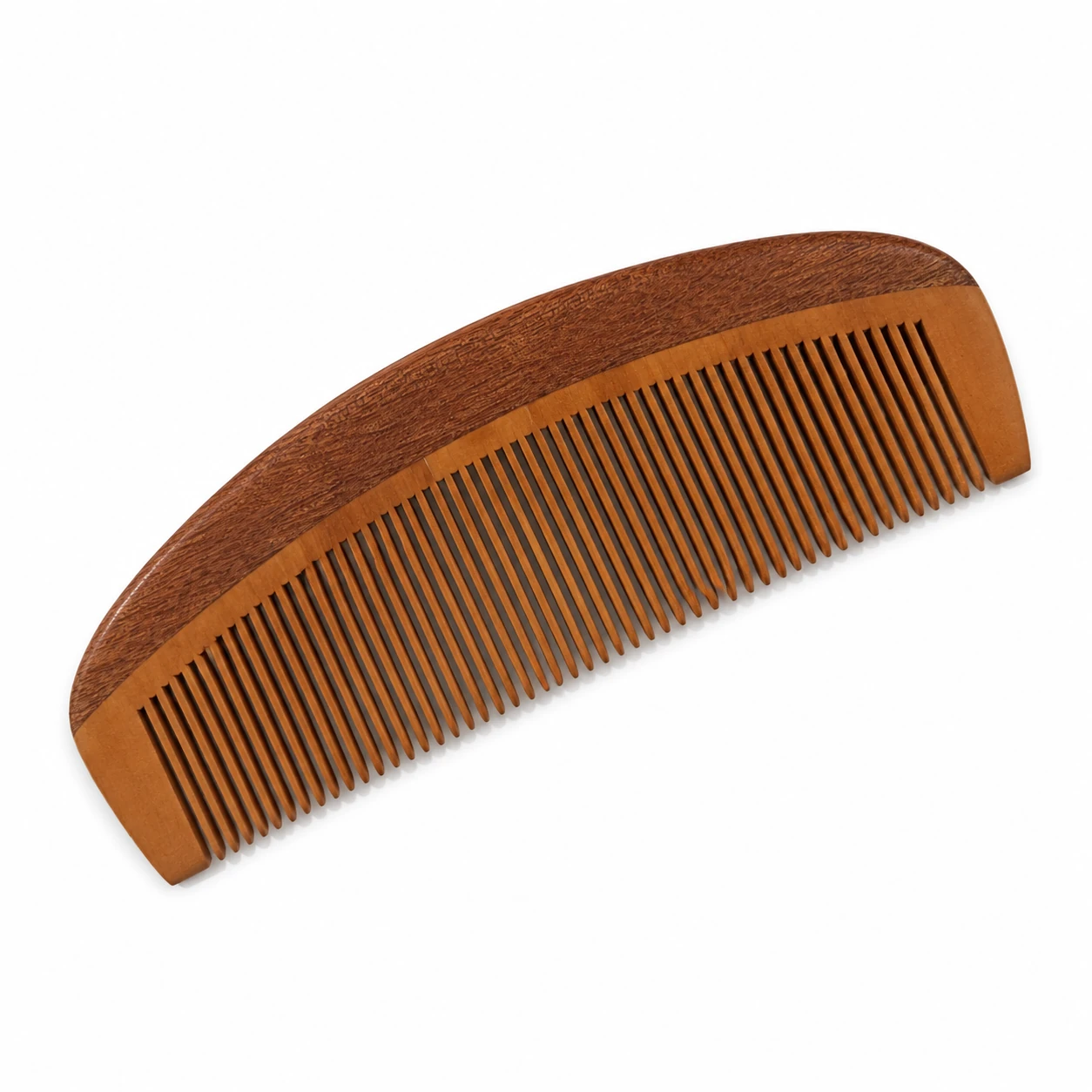
The wooden comb is the oldest grooming tool still in daily use, and it survives because nothing else does its job as well. Made from a single piece of wood or bamboo, it has no moving parts, no pad and no bristles — just teeth of a chosen width and a spine that keeps them rigid. That simplicity gives it three superpowers: precise control for parting and styling, safe use on wet hair, and a lifespan measured in decades rather than months.
Why wood wins for precision and wet hair
Wood and bamboo combs are the only tools you should use on wet hair, because wet hair is stretched, weakened and easily damaged. Nylon bristles catch and tear soaked strands; a wooden tooth separates them cleanly. The same rigidity that makes wood precise on dry hair makes it safe on wet hair: a comb tooth lands exactly where you put it, which is why hairstylists part, section and finish with a comb even when they brush with something else. Wood also has a naturally low coefficient of friction once finished with food-safe oil or wax, so the teeth glide through hair without static — an advantage in dry winter air and in air-conditioned hotel bathrooms alike.
Comb tooth profiles: wide, medium and fine
| Tooth profile | Best for | Typical use |
|---|---|---|
| Wide-tooth | Thick, curly or wet hair; detangling with minimal breakage | Hotel amenity sets, curly-hair lines, post-shower use |
| Medium-tooth | Daily styling for most hair types; beard and moustache grooming | Retail core lines, travel sets, gift sets |
| Fine-tooth | Precision parting, finishing and spreading styling products | Salon tools, barber lines, detailing ranges |
Who should choose a wooden comb
- People with thick, curly or coily hair who detangle on dry or conditioned hair
- Anyone who combs wet hair after showering or swimming
- Men and women using combs for beards, moustaches and precise styling
- Travelers who need a durable tool that survives the bottom of a bag
- Buyers assembling hotel amenity sets and natural-material gift ranges
Wooden comb care and finish
- Wash with mild soap and water, and dry immediately — wood is finished, not waterproof.
- Oil the comb twice a year with food-safe mineral oil or beeswax to keep the teeth smooth.
- Avoid leaving combs in humid bathrooms for weeks at a time; store them in a dry drawer.
- Inspect the teeth for splinters regularly — a smooth, rounded tooth is the whole point of a wood comb.
Natural rubber vs. synthetic pads: why BPA-free matters
The material of the cushion pad is the single most important health decision in a cushion brush. Natural rubber is harvested from rubber trees, is processed without BPA, phthalates or PVC, and keeps a consistent flex for years. Synthetic pads are cheaper, but many contain BPA-based compounds that are now under scrutiny in EU and North American regulation, and they harden and crack with age. For buyers, this is a compliance issue as much as a quality issue: claiming natural materials while using a synthetic pad is exactly the kind of inconsistency that B2B customers audit. At VANTRE, cushion brushes use natural rubber pads as standard, and we provide material documentation for EU, US and other regulated markets. If a supplier cannot document the pad compound, that is a red flag.
Bamboo handles: the sustainable upgrade
The handle is where the sustainability story is won or lost. Bamboo grows from planting to harvest in four to six years, regenerates from its own root system and needs no replanting — it is one of the fastest-renewing materials in the grooming category. When paired with chain-of-custody documentation, a bamboo-handled cushion brush becomes a verifiable claim rather than a marketing line. Wooden handles — beech, pear or camphor — offer a warmer grain and a heavier feel that reads as premium at retail. Both materials carry laser engraving, silk-screen printing, hot stamping or UV printing, so your logo and your sustainability message are produced on the same surface.
Three-way comparison: cushion brush, paddle brush and comb
| Tool | Core strength | Best channel |
|---|---|---|
| Cushion brush | Scalp massage, gentle detangling, volume and gloss | Retail premium lines, salons, hotel amenity upgrades |
| Paddle brush | Fast smoothing on long hair; broad strokes over large areas | Volume retail, salon finishing, e-commerce brands |
| Wooden comb | Precision, wet-hair safety, portability, zero static | Hotel sets, travel, gift, beard grooming, barber |
Spec'ing for hotels and amenity programs
Hotel procurement teams spec grooming tools on four criteria: safety, durability, presentation and sustainability. Safety means smooth rounded teeth and bristle tips, natural rubber pads and finishes that pass skin-contact safety approval. Durability means tools that survive hundreds of guest cycles without splinters or loosened bristles. Presentation means the comb and brush must photograph well and match the bathroom design language. Sustainability is the most rapidly growing criterion: branded amenity programs across Europe and North America now require responsibly sourced materials and plastic-free packaging. A standard VANTRE hotel set pairs a wide-tooth bamboo comb with a compact natural-rubber cushion brush, both available in responsibly sourced bamboo with laser-engraved logos, produced from 1,000 pieces and shipped on confirmed trade terms (FOB, CIF, EXW or DDP).
Retail assortment: pairing, pricing and merchandising
For retailers, cushion brushes and combs are not competitors — they are a pair that sells together. A common retail architecture is three price bands: an entry band with pocket combs and mini brushes, a mid band with bamboo and wood core SKUs, and a premium band with cushion brushes and gift sets. The merchandising rule of thumb is simple: show the comb and the brush side by side, label the hair types each one serves, and let the natural-material story do the talking at the shelf edge. Retailers who pair the two tools report higher average order values than those who stock either alone, because the customer leaves with a complete routine instead of a single tool.
OEM and private label: when to customise
Most brands start with existing styles, and most end up customising. The standard VANTRE path: choose existing styles from hundreds of SKUs at 1,000 pieces per design, add logo engraving or printing, then move to custom shapes, custom cushion hardness or fully private packaging as volumes grow. Custom projects start at 5,000 pieces. The full ODM cycle runs from requirement discussion through a concept or 3D rendering within two business days, samples in five to ten business days, mass production in 25–45 days, and final quality inspection before shipment. Sample fees are USD 1–10 per piece for existing styles and USD 50–100 for custom work, fully refunded once the mass order reaches 10,000 pieces. Quotations are issued within two business days, numbered QT-xxxxx and valid for 14 days.
Five buying mistakes that cost margin
- Choosing bristles or teeth by price instead of hair profile — wrong-fit products come back as returns and bad reviews.
- Skipping material documentation: one undocumented pad compound can stop an entire EU order at customs.
- Treating the two tools as competitors instead of a pair — and losing the bundle sale.
- Ordering the sustainable story without the certificates: FSC claims without chain-of-custody documents are a compliance risk, not a marketing win.
- Ignoring seasonal capacity: natural-material factories run at full load in Q3–Q4, so locking production slots early protects your launch date.
FAQ: cushion brush vs. comb
Can I use a cushion brush on wet hair? No — bristles of any kind can stretch and tear wet strands. Keep cushion brushes for dry styling and use a bamboo or wooden comb on wet hair.
Which tool is better for thick, curly hair? A wide-tooth wooden comb used on dry or conditioned hair gives the gentlest detangling, while a cushion brush can be reserved for scalp massage without brushing through the curls.
Are natural rubber pads really different from synthetic ones? Yes. Natural rubber flexes evenly, lasts for years and contains no BPA or phthalates; synthetic pads harden over time and raise compliance questions in regulated markets.
What is the minimum order for a private-label comb and brush program? Existing styles start at 1,000 pieces and custom projects at 5,000 pieces; samples are available first so you can approve the product before committing to volume.
Build the two-tool range with VANTRE
VANTRE is a bamboo and wood comb manufacturer founded in 2005 in Langqiao, Jing County, Anhui, with a 12,000 m² plant, more than 50 staff and an annual capacity of 5,000,000 combs, exporting worldwide with responsible sourcing, quality management and social responsibility documentation. Our cushion brushes, wooden combs and comb-and-brush pairs are available as existing styles or fully custom. Send your inquiry to quote@vantrecomb.com and we will reply with a numbered quotation within two business days.