Why amenity combs still matter in the guest experience
The amenity comb is one of the smallest items in a hotel bathroom, yet it is touched by nearly every guest. A well-chosen comb — comfortable to hold, gentle on the hair, easy to dispose of or recycle — quietly raises the perceived quality of your rooms. For procurement teams, it is also one of the easiest categories to upgrade without increasing cost: switching from a generic plastic comb to a bamboo comb with your logo costs cents per unit, but changes what guests take home with them. In this guide, we walk through every specification you need to lock down before ordering hotel amenity combs in bulk, based on 20+ years of serving hospitality brands from our factory in Langqiao, China.
Step 1: Define your hotel comb requirement before you source
Before comparing suppliers, write down five answers: which comb types your property needs, which materials fit your brand and budget, what sizes and quantities you require, how you want your logo applied, and how the comb will be packaged. Hoteliers who skip this step often discover at sampling stage that their preferred logo position does not fit a standard comb blank, or that their packaging budget is at odds with their material choice. A five-minute specification sheet prevents weeks of back-and-forth.
- Comb types needed: hotel comb, travel comb, wide-tooth comb, pocket comb, massage brush, paddle brush, amenity set or gift set
- Material: bamboo, wood, plastic or cushioned construction
- Length range: standard hotel amenity combs commonly 18–21 cm (see sizing FAQ), 10–15 cm for travel combs
- Quantity per room and annual consumption based on occupancy
- Branding method: laser engraving, silkscreen, hot stamping or UV printing
- Packaging: single wrap, kraft sleeve, paper box or amenity pouch
Choose the right comb type for each room category
Not every property needs the same comb. Budget and mid-scale hotels usually stock one standard amenity comb per bathroom; business hotels add a pocket comb to the desk drawer or vanity kit; spa and wellness properties stock wide-tooth combs and massage brushes; luxury properties upgrade to wood combs or amenity sets. VANTRE produces hundreds of SKUs across five series, so you can pick a distinct style per room tier instead of standardising down to a single item.
Materials: bamboo, wood or plastic — what changes your story
Material choice drives your sustainability story, unit cost and perceived quality. Bamboo combs are hard, moisture-resistant and biodegradable, which is why international hotel groups are moving their amenity programmes to bamboo under ESG roadmaps. Wood combs sit one tier higher in perceived luxury. Plastic combs remain the cheapest option and are still required in some markets for waterproof guest-use scenarios. Cushion combs suit spa floors where comfort matters more than price. Our responsibly sourced bamboo means your amenity story is verifiable, not just claimable.
Sizing and dimensions: the quiet specification
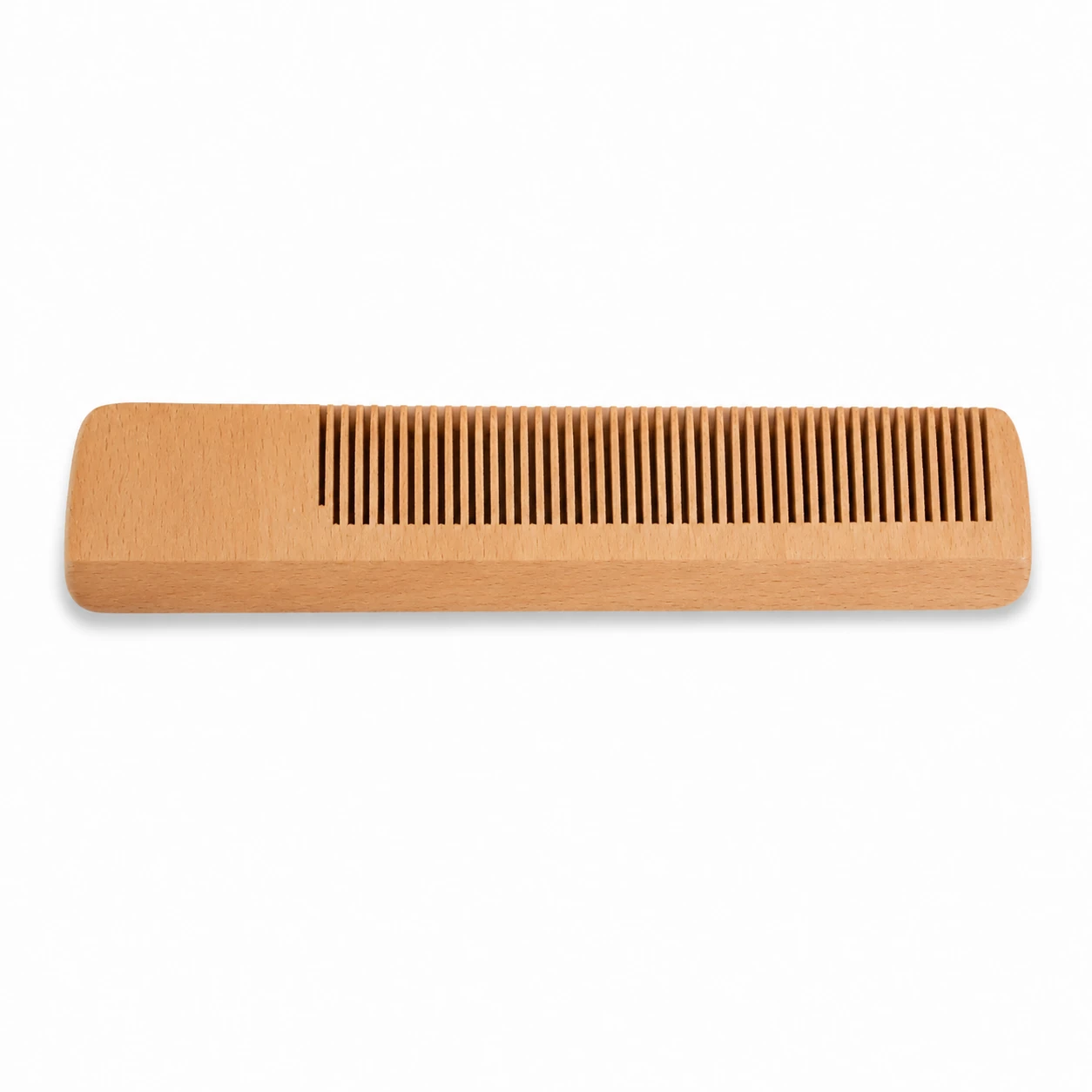
Length is the first dimension guests notice. Standard hotel amenity combs commonly run 18–21 cm (see sizing FAQ); travel combs run 10–15 cm; pocket combs sit around 8–10 cm. Tooth spacing matters for hair types: wider teeth glide through thick, curly or wet hair, while fine teeth suit short, straight hair. Round tooth tips are safer for children and gentler on the scalp. When you request samples, ask for the dimension sheet alongside the sample — a factory that cannot document tooth pitch and tip radius is a factory you should not rely on for repeat orders.
Volume planning: from room count to annual consumption
A typical hotel room consumes 30–50 amenity combs per year depending on occupancy and guest profile. A 500-room property therefore needs 15,000–25,000 combs annually. Plan orders quarterly rather than annually: your MOQ of 1,000 pieces per model keeps inventory small, and VANTRE can hold phased delivery schedules so a single order token covers the whole year without filling your warehouse. Quote numbers carry a 14-day validity, so lock prices during your budgeting window.
Step 2: Match the comb to the guest journey
The comb is not one product; it is a set of touchpoints. A guest encounters a comb in the bathroom, in the travel kit, at the spa counter, in the conference room and sometimes in the gift bag at check-out. Each touchpoint has a different ideal product. The next five sections map the most common hospitality scenarios to specific comb types, with the WHY behind each recommendation and the TIPS our factory engineers give to hotel buyers.
Standard hotel combs for bathrooms and vanity kits
WHY: The bathroom comb is the baseline of your amenity programme — it must look intentional, feel smooth and hold up to daily moisture. TIPS: choose bamboo or wood over plastic if your brand mentions sustainability anywhere; specify a matte, polished edge so no burr touches the hair; and keep the logo small on the handle so it reads as premium rather than promotional. A standard hotel comb at 0.30–0.50 USD per unit is the cheapest branding real estate in your bathroom.
Travel combs for in-room amenity kits and airport lounges
WHY: Travel combs ride in amenity kits, lounge counters and flight comfort kits, where weight and size are constrained. TIPS: a 10–15 cm length with rounded tips survives rough handling; a full-length case or sleeve keeps the teeth clean; and engraving beats printed labels because it resists rubbing off inside a bag. If your kits go through airport security, avoid metal components entirely.
Wide-tooth combs for hair care and spa floors
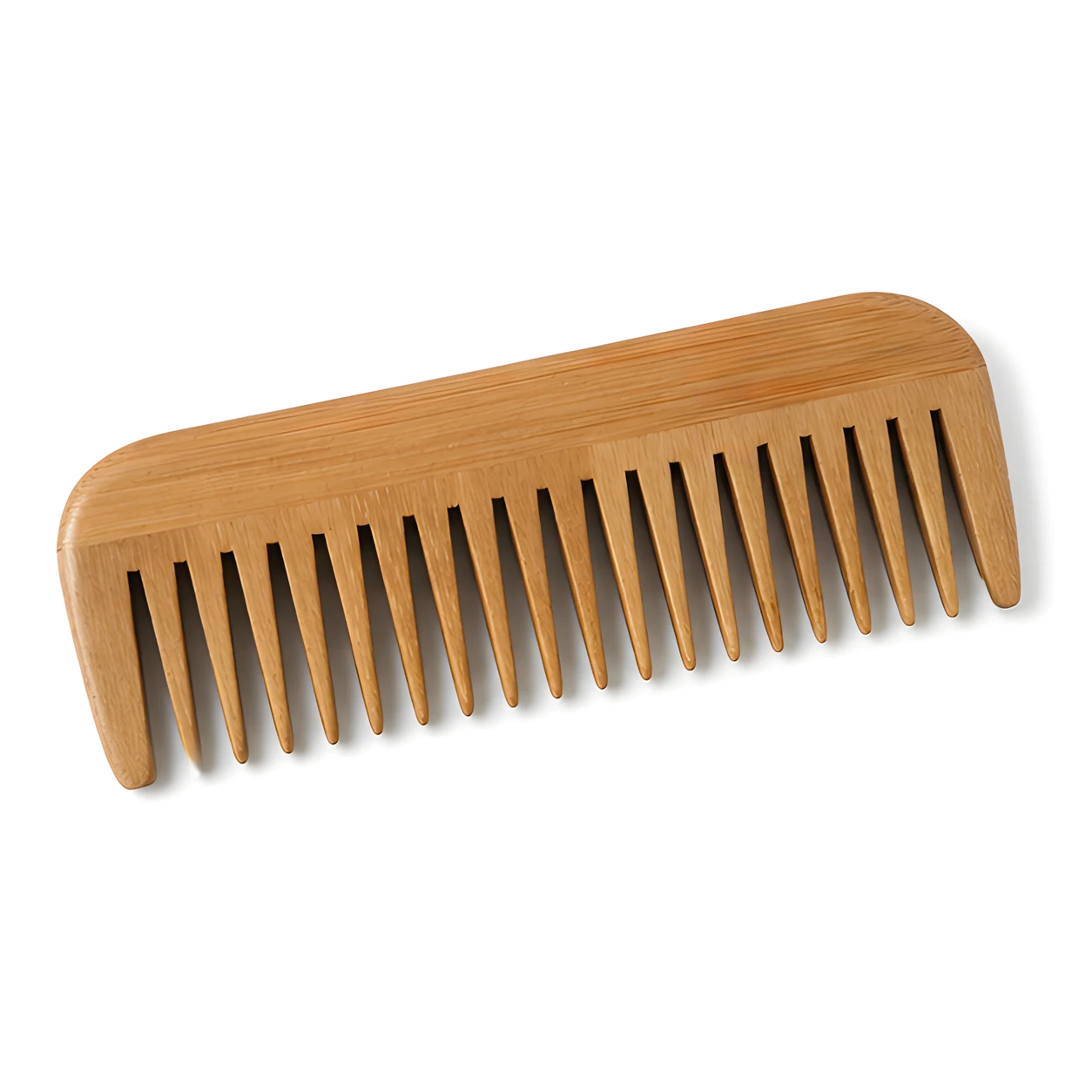
WHY: Spa guests arrive with wet hair, and wide-tooth combs detangle without ripping. Properties with a high share of curly-haired guests keep wide-tooth combs stocked permanently. TIPS: use 3–5 mm tooth pitch, rounded tips and a longer overall body for better grip in wet hands. Bamboo wide-tooth combs are naturally antistatic, which matters when guests use them on freshly conditioned hair.
Pocket combs for business travellers and conference rooms
WHY: Business hotels restock pocket combs in desk drawers and conference amenity trays — a functional detail guests genuinely notice after a long meeting. TIPS: keep them compact at 8–10 cm, engrave the hotel monogram rather than printing it, and pack them in a minimal paper sleeve so they pass any single-use plastic audit your group is running.
Massage brushes and paddle brushes for spa and wellness brands
WHY: Massage brushes and paddle brushes turn the amenity tray into an experience — they are the products guests photograph and mention in reviews. TIPS: rubber-cushioned pads with wooden handles hold up to daily disinfection; natural bristles suit scalp massage; and a branded brush inside a gift set extends your brand into the home long after check-out. Paddle brushes also carry large logo surfaces, ideal for laser engraving.
Amenity sets and gift sets: raising perceived value
WHY: Combined sets — comb, toothbrush, razor, shower cap — trade at higher perceived value than the sum of their parts, which matters for room tiers and loyalty programmes. TIPS: mix materials deliberately, such as a bamboo comb with a kraft amenity pouch; standardise the set list so housekeeping packing is fast; and use gift sets for VIP floors and anniversaries. Our amenity set series covers the full room tier range from three-star to luxury.
Quality expectations: what to inspect before approving a sample
Approve a sample on three things: geometry, finish and strength. Measure overall length and tooth pitch against your specification; run your fingertip along every tooth looking for burrs; and bend a single tooth to check spring-back — a tooth that snaps is a tooth that fails in a guest's hair. Our factory runs three sanding rounds on every comb plus a hand pass over each tooth, and every batch is checked for dimension, tooth strength and packaging before shipping under our documented quality system.
Branding: laser engraving, silkscreen, hot stamping and UV printing
Laser engraving is the hospitality standard: stable positioning, permanent, and it never peels in wet environments. Silkscreen suits flat handle surfaces and kraft packaging. Hot stamping adds a metallic premium finish for luxury tiers. UV printing brings full-colour artwork to wooden handles. Whatever the method, our design team sends artwork proofs within two working days, so the branding step rarely delays your production timeline.
Packaging: single-wrap, kraft sleeve or paper box
Packaging protects the comb, communicates the tier and increasingly carries the sustainability message. Single-wrap film suits economy volumes; kraft sleeves and paper boxes suit branded programmes; amenity pouches work for kits. Packaging MOQ starts at 1,000 pieces for boxes, and we supply 2–3 structure mockups before you commit, so your procurement team sees the finished shelf image before production begins.

Budgeting: unit price versus total cost of ownership
The cheapest unit price is rarely the cheapest programme. Compare total cost: damaged-goods rate in transit, storage footprint of bulky packaging, reorder lead time and the cost of an amenity that guests remember negatively. A 0.50 USD bamboo comb that guests keep is cheaper marketing than a 0.20 USD plastic comb that ends in landfill. Keep your budget conversation with suppliers framed around delivered, inspected quality.
MOQ, sampling and lead times: plan your timeline
Standard models carry an MOQ of 1,000 pieces; customised combs with new moulds or sizes start at 5,000 pieces. Samples for existing models cost USD 1–10 per piece and USD 50–100 per piece for customised designs, refunded fully once your bulk order reaches 10,000 pieces. After sample approval, production takes 25–45 days (40–60 in peak season). Book peak-season capacity for Q3 hotel openings at least three months ahead.
Certifications and compliance for hotel supply chains
Hotel groups increasingly audit amenity suppliers on three documents: FSC chain-of-custody certification for wood and bamboo claims, ISO 9001:2015 for quality management, and BSCI for social responsibility. Ask for copies before sampling. If your group publishes an ESG report, these certificates convert your amenity programme from a cost line into a verified sustainability metric your annual report can cite.
Shipping, warehousing and reorder cycles
We ship on confirmed trade terms (FOB, CIF, EXW or DDP). Sea freight takes 30–35 days to the EU and 25–30 days to the US; courier services DHL, FedEx and UPS suit urgent top-ups. Work backwards from your housekeeping stock: one month of buffer stock in your own warehouse, one order in production, and one in planning. This three-bucket cycle protects you through customs delays and peak season. Keeping a rolling 12-month forecast with your supplier also helps them reserve raw bamboo and packing materials in advance, so emergency top-ups stay inside the standard lead time rather than drifting into peak-season delays. A single consolidated forecast sheet also makes annual price reviews predictable for both sides.
FAQ: hotel amenity comb buying questions answered
Q: What MOQ should I expect for branded hotel combs? A: VANTRE's standard MOQ is 1,000 pieces per existing model and 5,000 pieces for customised combs. Large groups can combine multiple properties under one order token with phased delivery, which preserves MOQ pricing while smoothing warehouse load.
Q: Which branding method lasts longest in bathrooms? A: Laser engraving. It holds stable positioning and resists peeling in moisture and reads as premium. Silkscreen and UV printing suit flat handles and packaging; hot stamping adds luxury metallic finishes for premium floors.
Q: How do I time my first order for a hotel opening? A: Add up sample time (5–10 working days), production (25–45 days) and sea freight (30–35 days to the EU). Start the first order 4–5 months before opening day, and book peak-season capacity earlier.
A 0.50 USD amenity comb is one of the cheapest brand touches a hotel owns — and one of the most frequently noticed.
Ready to source amenity combs for your property?
You now have the full specification framework: comb types per room tier, material logic, sizing, volume planning, branding, packaging, quality gates and timelines. The next step is a sample box. Send us your property profile and annual consumption — we will reply with a quotation within two working days, a product recommendation and a sample plan, and our sales team will walk you through every gate from artwork proof to delivered stock.